

Leaky gut syndrome is a general term for conditions associated with increased intestine permeability. Intestines in healthy individuals have semi-permeability to allow for absorption of nutrients and water into the bloodstream.
However, larger substances, including toxins, undigested food particles, and bacteria can cross the intestinal walls and enter the bloodstream in individuals with leaky gut syndrome. When toxins cross intestinal walls, they can induce an inflammatory response which present as various conditions like gastritis.
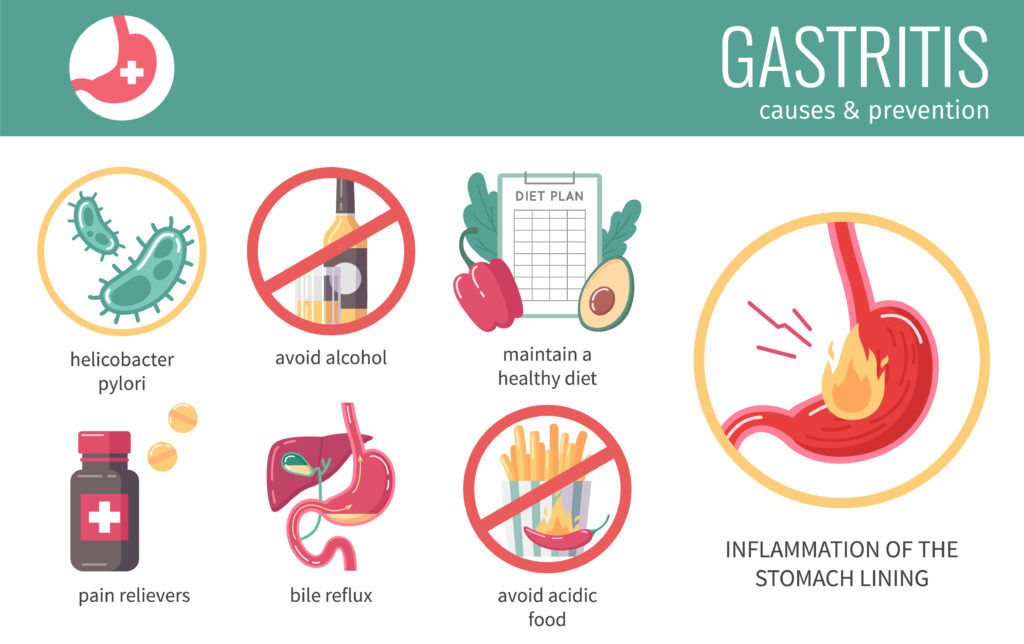
Gastritis is a condition involving the inflammation of the lining of the stomach. The anatomy of the stomach is such that the mucosal layer that lines it protects it from irritation by stomach acid. However, some substances cause damage to this mucosal layer and expose the stomach to erosion by stomach acid, bleeding, and ulcers.
Gastritis can be acute or chronic, with the condition being common in developing countries. The prevalence is about 69% in Africa, with Helicobacter pylori as the leading causative agent (Azer and Awosika, 2023). In Kenya, the prevalence of H. pylori-associated gastritis is staggeringly high, with about 55% of adults and 74% of children infected (Smith et al., 2019).
Causes and risk factors
• Viral infections like cytomegalovirus and bacterial infections by Helicobacter pylori
• Fungal infections like histoplasmosis and candidiasis
• Excessive consumption of alcohol
• Regular use of NSAIDs such as aspirin and ibuprofen
• Chemotherapy treatment
• Older age is associated with thinning of the stomach lining
• Substance abuse such as cocaine and tobacco
• Stress
• Digestive conditions like Inflammatory Bowel syndrome (IBS) and crohn’s disease
• Reflux of bile acid
• Radiation
• Direct trauma to the abdominal area
• Insufficient blood supply to the stomach
• Obesity
Symptoms
• Burning pain in the upper abdomen
• Bitter taste in the mouth
• Loss of appetite
• Nausea
• Indigestion
• Vomiting blood
• Abdominal bloating (Feeling gassy)
• Black tarry stools
• Weight loss
Diagnosis
Often, your doctor will investigate the condition by asking questions about your symptoms, family history of the condition, lifestyle behaviors, and performing a physical examination.
Tests that may be performed include:
1. Functional Testing; to assess microbiome balance, integrity of gut health and gut inflammation
2. Upper gastrointestinal endoscopy- This imaging technique permits viewing the inflammation in the esophagus, stomach, and intestines. It also allows collection of a biopsy for further tests under a microscope (El-Nakeep, 2023).
3. Urea breath test- It tests for H. Pylori infection. It involves you swallowing a urea capsule and testing for the excretion of carbon dioxide atoms in your breathe.
4. Blood tests
5. Upper gastrointestinal series- It involves swallowing a solution of barium followed by an X-ray that allows the doctor to pinpoint areas of concern.
Pharmacological management
Pharmacological management of gastritis will depend on the underlying cause of the disease.
• For H. pylori-associated gastritis, triple therapy of two antibiotics and a proton pump inhibitor to clear the bacteria. The triple therapy is composed of clarithromycin, amoxicillin, and esomeprazole.
• For gastritis caused by other agents, antiacid medications like esomeprazole are used.
• Vitamin B12 supplementation for gastritis caused by pernicious anemia
Non-pharmacological management
Lifestyle modifications are key in reducing the progression of gastritis from acute to chronic and preventing one from developing the condition. These include:
1. Quit smoking. For those who smoke a packet or more of cigarettes a day, gradual withdrawal may be necessary instead of an abrupt withdrawal.
2. Avoid excessive consumption of alcohol or quit drinking entirely. The recommended consumption of alcohol is no more than 10-14 units (10 ml) of pure alcohol per week. This is equivalent to the amount of alcohol an average adult liver can process in an hour.
3. Eating small portions of food regularly and slowly helps in digestion and minimizes the frequency of upper abdominal pain.
4. Dietary modifications are essential, which include eliminating certain foods in your diet, such as caffeinated drinks, and fried, spicy or salty foods. Eliminating processed foods and red meat is also necessary.
5. Incorporating fresh fruits and vegetables like broccoli berries, and green tea have antioxidant properties that can help lower free radicals in the body.
Omega-3-rich foods or supplements and probiotics are also important in replenishing gut microbiota and help in digestion.
Incorporation of gut healing foods & supplements such as Bone broth, L-glutamine helps in repair of the gut lining
6. Mindful practices such as yoga three times a week will help with stress-induced gastritis.
7. Proper hygiene practices such as frequent hand-washing, eating properly prepared and cooked meals, and drinking clean or boiled water will reduce the recurrence of H. pylori infections.
8. Replacing of NSAIDs with alternative painkillers and muscle relaxants such as paracetamol or Magnesium is also necessary.
9. Overweight individuals have a risk of developing the condition and should work towards maintaining a healthy weight.
Complications of gastritis
Gastritis can lead to several complications if left untreated. These include:
• Anemia due to excessive bleeding
• Deficiencies of vitamins e.g. vitamin B12
• Perforation in the stomach
• Abdominal cancers such as stomach or gastric cancer
• Chronic atrophic gastritis in which there is loss of gastric glands cells
References
Azer, S. and Awosika, A., (2023) Gastritis. StatPearls Publishing. [online]
Available at: https://www.ncbi.nlm.nih.gov/books/NBK544250/#:~:text=Chronic%20gastritis
%20remains%20a%20relatively,about%2050%25%20in%20developing%20countries.
El-Nakeep, S., (2023) Acute Gastritis. Medscape. [online] Available at: https://emedicine.medscape.com/article/175909-overview?form=fpf#a5.
Smith, S., Fowora, M. and Pellicano, R., (2019) Infections with Helicobacter pylori and challenges encountered in Africa. World Journal of Gastroenterology, 2525, pp.3183–3195.